
How do pests get into a roof?
Pests usually enter through small openings where roofing materials, siding, vents, chimneys, and utility lines meet. A gap that seems too narrow for a person may be large enough for a mouse, bat, squirrel, bird, or insect colony.
Roofs are especially vulnerable because they contain several overlapping systems rather than one continuous surface. Common entry points include:
- Loose or missing shingles
- Damaged soffits and fascia boards
- Gaps around plumbing vents
- Unscreened attic vents
- Openings near chimneys and roof-wall intersections
- Cracked mortar or deteriorated flashing
- Holes made by squirrels, birds, or other animals
- Gaps around cables, pipes, and electrical penetrations
- Roof edges hidden behind gutters or trim
In Glenmont, NY, changing weather can gradually enlarge these openings. Freeze-thaw cycles, wind, heavy rain, falling branches, and summer heat can loosen materials or create cracks that pests later use.
Which pests commonly enter through roofs?
The type of pest often depends on the size and location of the opening. Mice and insects may use very small gaps, while larger animals usually enter through damaged trim, vents, or roof edges.
Mice and other small rodents
Rodents can squeeze through surprisingly narrow openings. They often enter around attic vents, soffits, roof-wall junctions, and utility penetrations. Once inside, they may nest in insulation, chew wiring, contaminate stored items, and create persistent odors.
A mouse does not necessarily need a visible hole in the shingles. The actual entry point may be several feet away, hidden behind fascia, siding, or attic insulation.
Squirrels
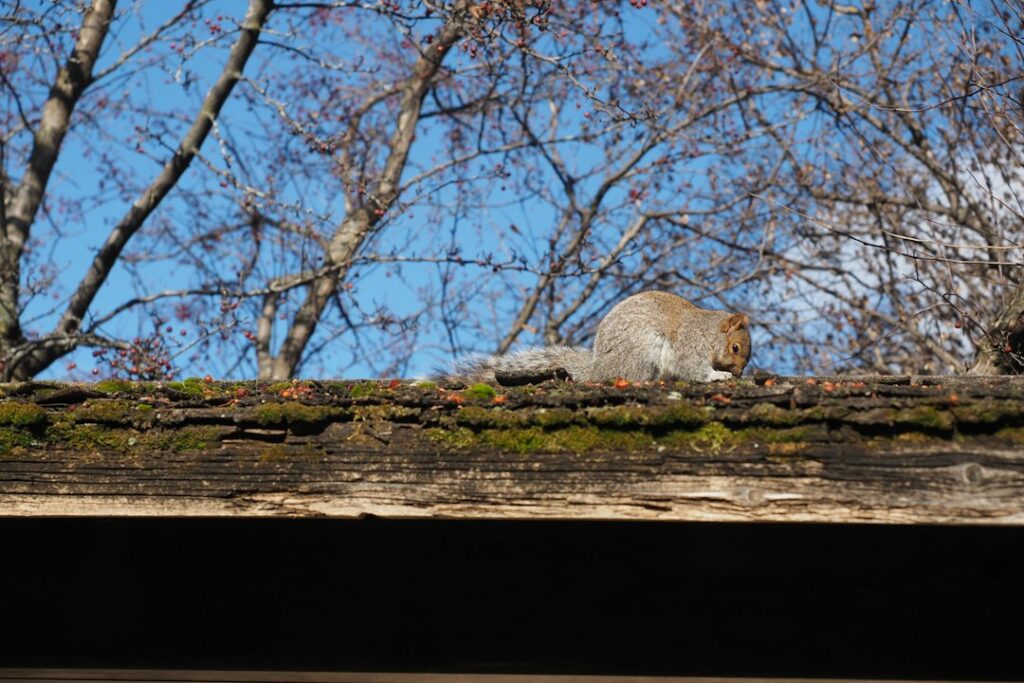
Squirrels commonly exploit weak roof edges, damaged soffits, and openings near dormers or attic vents. They may enlarge an existing hole by chewing through wood, plastic, or softer roofing components.
Scratching or chewing sounds during daylight hours can suggest squirrel activity. A damaged opening may become larger quickly, especially if an animal is using the attic for nesting.
Bats
Bats may enter through narrow gaps near ridge vents, soffits, flashing, chimneys, or roof-wall connections. They are particularly good at finding openings that are difficult to see from the ground.
A bat presence may be indicated by guano near an opening, staining on exterior materials, or sounds from the attic around dusk. Because bats can carry diseases and may be protected during certain stages of their life cycle, removal should be handled carefully and legally.
Birds
Birds may enter through broken vent covers, missing screens, or gaps beneath roof edges. They can bring nesting material into an attic and block ventilation pathways.
A bird nest inside a vent can also create a fire or moisture concern if it is near electrical equipment or prevents proper airflow.
Insects
Wasps, hornets, carpenter bees, ants, and other insects may use cracks in fascia, soffits, roof framing, or wall-to-roof connections. Insects do not always enter the attic directly. Some establish nests inside trim, wall cavities, or areas of softened wood.
Moisture damage often makes these locations more attractive because wet or decaying wood is easier to penetrate.
Why are roof edges such common entry points?
Roof edges contain joints, seams, and ventilation openings that require protective detailing. They are also exposed to wind-driven rain and are easy for animals to reach from nearby trees, fences, utility lines, or the ground.
Soffits provide attic ventilation, but their screens can become loose, corroded, or damaged. Fascia boards may rot behind gutters when water remains trapped or when gutter overflow repeatedly wets the wood. The intersection between a roof and an exterior wall can also develop gaps if flashing separates or siding shifts.
A roof may look intact from the street while the vulnerable area is underneath the edge. For that reason, checking only the shingles may miss the actual pest pathway.
Can pests enter through roof vents?
Yes. Roof vents are frequent entry points when covers are broken, screens are missing, or vent assemblies pull away from the roof surface.
Different vents present different risks:
- Ridge vents may allow entry if end caps or protective mesh are damaged.
- Bathroom and kitchen exhaust vents may have loose exterior covers.
- Plumbing vents can develop gaps around flashing boots.
- Gable and soffit vents may have torn screens or damaged louvers.
- Chimney openings may be accessible if the cap or spark screen is missing.
Ventilation should not be blocked with improvised materials. A repair must preserve airflow while preventing animal entry. Covering a vent completely can trap heat and moisture in the attic, creating a separate roofing problem.
What signs suggest pests are entering the attic?
Some signs are obvious, while others resemble ordinary roof deterioration. Useful clues include:
- Scratching, scampering, fluttering, or chewing sounds
- Droppings or urine odors
- Nesting material near vents or insulation
- Grease marks along frequently used paths
- Gnaw marks on wood, plastic, or wiring
- Holes in soffits, fascia, or roof sheathing
- Damaged insulation or disturbed stored items
- Feathers, fur, or insect remains
- Staining around a small exterior opening
- Daylight visible through attic surfaces

Timing can help identify the likely source. Nighttime scratching may point to rodents, while daytime movement is more consistent with squirrels. Sounds around dusk can be associated with bats, although sound alone is not enough for a definite identification.
Does roof damage always mean pests are present?
No. A missing shingle, deteriorated flashing, or soft fascia board may be caused by weather, age, moisture, or poor ventilation without any animal activity.
However, roof damage and pest activity can reinforce each other. Water may weaken wood, making it easier for an animal to enter. An animal may then enlarge the opening, damage insulation, or create additional moisture problems.
It is also common to find evidence of a former entry point after the animal is gone. Droppings, nesting material, and staining may remain even when no current activity is taking place.
How can households reduce roof entry risks?
Prevention starts with maintaining the roof perimeter, not just replacing visible shingles. Useful measures include:
- Inspecting soffits, fascia, vents, and flashing at least twice a year
- Checking the roof after major wind, ice, or branch damage
- Keeping gutters clear so overflowing water does not wet fascia
- Trimming branches that provide easy access to the roof
- Replacing broken vent screens with durable, properly fitted protection
- Sealing gaps around pipes and cables with materials suited to the location
- Keeping attic storage away from vents and roof edges
- Repairing moisture damage before wood becomes soft or decayed
- Avoiding exposed food, birdseed, or pet food near exterior walls
- Looking for openings from both the attic and the outside
Repairs should not simply close an opening if an animal may still be inside. Sealing an occupied space can trap wildlife, separate a mother from young, or force an animal deeper into the structure. The safest approach depends on the species, the season, and the location of the opening.
When does a pest-related roof problem require extra caution?
Extra caution is appropriate when the problem involves bats, aggressive insects, electrical wiring, contaminated insulation, unstable roofing materials, or an animal that cannot be identified.
Attic spaces can be cramped, poorly ventilated, hot, and contaminated with droppings. Walking on the wrong area can also damage ceiling materials or fall through hidden gaps. Protective equipment and safe access matter, especially when cleaning nesting material or disturbed insulation.
A roof inspection should also be treated as a safety issue after severe weather. Loose shingles, damaged flashing, and fallen branches may create both pest openings and fall hazards. The condition of the roof edge, attic ventilation, and interior signs together usually provide the clearest explanation of how pests entered and what needs to be corrected.
