
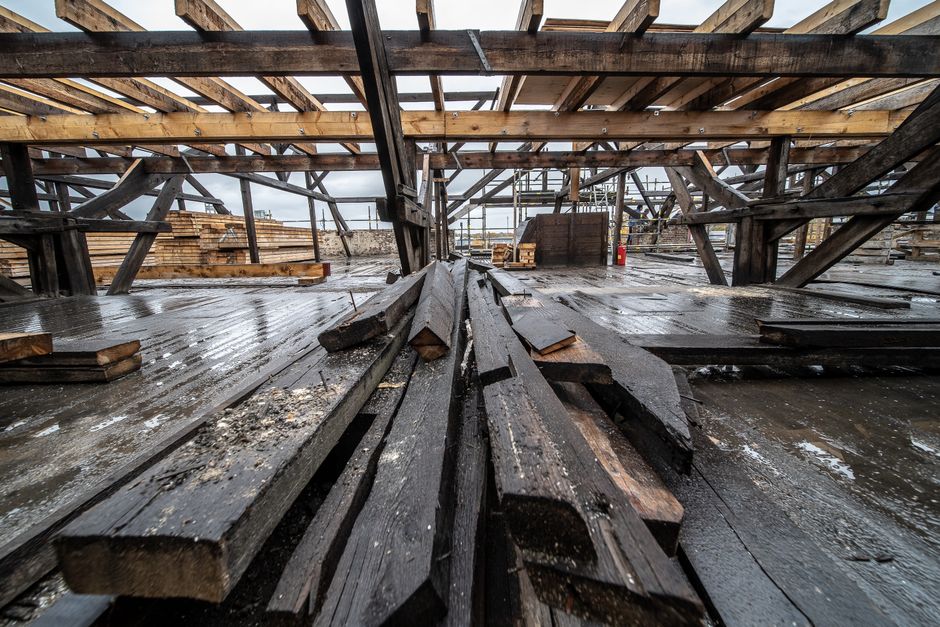
A roof leak rarely stays limited to the roofing material. Water can travel along decking, rafters, insulation, drywall, wiring, and wall cavities before the first visible stain appears. In Glenmont, NY, seasonal rain, snow, ice, freeze-thaw cycles, and wind can all create conditions that allow a small roof defect to become a structural problem.
What parts of a home can a roof leak damage?
A leaking roof can affect the roof deck, framing, insulation, ceilings, walls, electrical components, and sometimes the foundation. The extent of the damage depends on how long water has been entering, how much water is involved, and whether the affected area can dry properly.
The most common structural areas at risk include:
- Roof sheathing, also called the roof deck
- Rafters, trusses, and other framing members
- Attic insulation
- Ceiling drywall and plaster
- Wall framing below the leak
- Exterior trim, soffits, and fascia
- Electrical wiring and fixtures
- Masonry or foundation areas where water travels downward
Water does not always drip straight down. It may move across the underside of the roof, follow a rafter, collect around a penetration, or travel inside a wall before appearing several feet away from the actual entry point.
How does a roof leak weaken roof framing?
Roof framing can weaken when wood remains damp for an extended period. Repeated wetting and drying may cause wood to swell, shrink, split, or lose strength. Persistent moisture also creates favorable conditions for wood decay.
A small leak near a roof edge may damage the fascia or the ends of rafters. A leak near a valley, chimney, vent, or roof penetration may affect a broader section of the roof deck and framing. If water reaches a truss or rafter connection, deterioration in that area can reduce the framing system’s ability to carry roof loads.
Signs of possible framing damage include:
- Sagging roof lines viewed from outside
- A soft or springy area under roof coverings
- Cracked or sagging ceilings
- Doors that begin sticking near a water-damaged wall
- Discolored or deteriorated wood in the attic
- Musty odors that persist after the weather clears
A ceiling stain by itself does not prove that a major structural failure is occurring. However, an expanding stain, visible sagging, or soft wood should be treated as a serious warning.
Can a leak damage the attic and insulation?
Yes. Roof leaks commonly affect attics before they become visible inside living areas. Wet insulation loses much of its insulating value and may remain damp for a long time, particularly where airflow is limited.
Moist insulation can also contribute to:
- Mold growth on nearby wood and building materials
- Higher heating and cooling demand
- Damp odors
- Ice-related problems during cold weather
- Damage to ceiling materials below the attic
In homes with unfinished attics, water may be easier to see but harder to trace. Insulation can hide wet roof decking, while stored belongings may absorb moisture and prevent proper drying.
Attic ventilation does not cause a roof leak, but poor ventilation can slow drying and increase condensation concerns. During Glenmont’s cold season, warm indoor air that reaches a cold attic surface may condense and resemble a roof leak. Determining whether moisture came from outside precipitation or indoor condensation requires examining weather patterns, roof details, and the location of the dampness.
How can water damage ceilings and walls?
Water entering through the roof can soak drywall, plaster, paint, wallpaper, and wood trim. Ceiling materials may stain first, then soften, sag, or break away from their fasteners. Wall damage may show as bubbling paint, peeling surfaces, swollen trim, or discoloration around windows and corners.
A wall stain below a roof does not always mean the leak is directly above it. Water can travel horizontally along framing or behind finished surfaces. This makes surface patching unreliable if the source has not been identified.
Repeated moisture can also damage the connections between wall framing and the roof structure. In severe cases, deteriorated framing may affect the stability of a ceiling or upper wall. Any ceiling that is visibly bulging should be kept clear, because accumulated water can add considerable weight before the material gives way.
Does a roof leak create electrical hazards?
It can. Water may reach electrical cables, junction boxes, ceiling fixtures, recessed lights, attic equipment, or other energized components. This creates a risk of short circuits, equipment damage, shock, or fire.
Warning signs include:
- Flickering lights after rain or snow
- Tripped breakers
- Buzzing or crackling near a fixture
- Water around outlets or light switches
- A burning smell
- A ceiling fixture that becomes wet
Do not touch wet electrical fixtures or stand beneath a leaking light. If water is near electrical equipment, shut off power to the affected circuit only if the panel and surrounding area are dry and accessible. If there is any uncertainty, avoid the area and seek qualified emergency assistance.
Can roof leaks cause mold or rot?
Yes. Mold can develop when building materials remain damp, especially in dark, poorly ventilated areas. Wood rot may occur when moisture repeatedly reaches roof decking, rafters, sheathing, wall framing, or trim.
Mold and decay are not limited to the visible stain. Growth may occur behind insulation, inside wall cavities, or on the hidden side of drywall. Removing only the discolored surface does not correct the underlying moisture problem.
The risk increases when:
- Water enters repeatedly during several storms
- Wet materials cannot dry within a short period
- Insulation stays compressed and damp
- Air movement in the attic or wall cavity is limited
- The leak affects porous materials such as wood, paper-faced drywall, or carpet
A musty smell after a leak is a useful clue, even when no mold is visible.
Why are winter leaks especially troublesome?
Snow, ice, and repeated freezing and thawing can make roof leaks harder to diagnose. Melting snow may enter through weak flashing, damaged shingles, open seams, or poorly sealed penetrations. Ice can also obstruct drainage paths and keep water against roofing materials longer than ordinary rain would.
Freeze-thaw cycles may enlarge small cracks as trapped water expands and contracts. A leak may therefore appear during a thaw even though the original defect developed earlier in the winter.
After heavy snow or an ice event, avoid climbing onto the roof. Snow-covered surfaces are slippery, and hidden weak areas may not support a person safely. Interior observations from the attic and living spaces are safer starting points.
What should residents do when a leak is discovered?
The first goal is to limit additional damage without creating a safety hazard. Place containers under active drips, move furniture and belongings away from the affected area, and protect flooring with plastic or towels. Do not puncture a swollen ceiling unless the action can be performed safely and electrical hazards have been ruled out.
Document the location and appearance of stains, drips, damaged materials, and outdoor weather conditions. If safe, inspect the attic from a stable surface using a flashlight, but avoid stepping on insulation or roof decking that may be weak.
Roof repairs should not be delayed when the leak is active, spreading, or affecting structural wood. Electrical concerns, major ceiling sagging, suspected widespread rot, and unsafe roof access require qualified assistance because the danger may not be visible from the room below.
A roof leak is easier to manage when addressed before wet materials remain enclosed for days or weeks. Prompt attention helps distinguish a limited roofing defect from damage that has extended into the home’s structure.
